The Quiet Ones Do the Heavy Lifting: Rethinking How You Build an Outfit
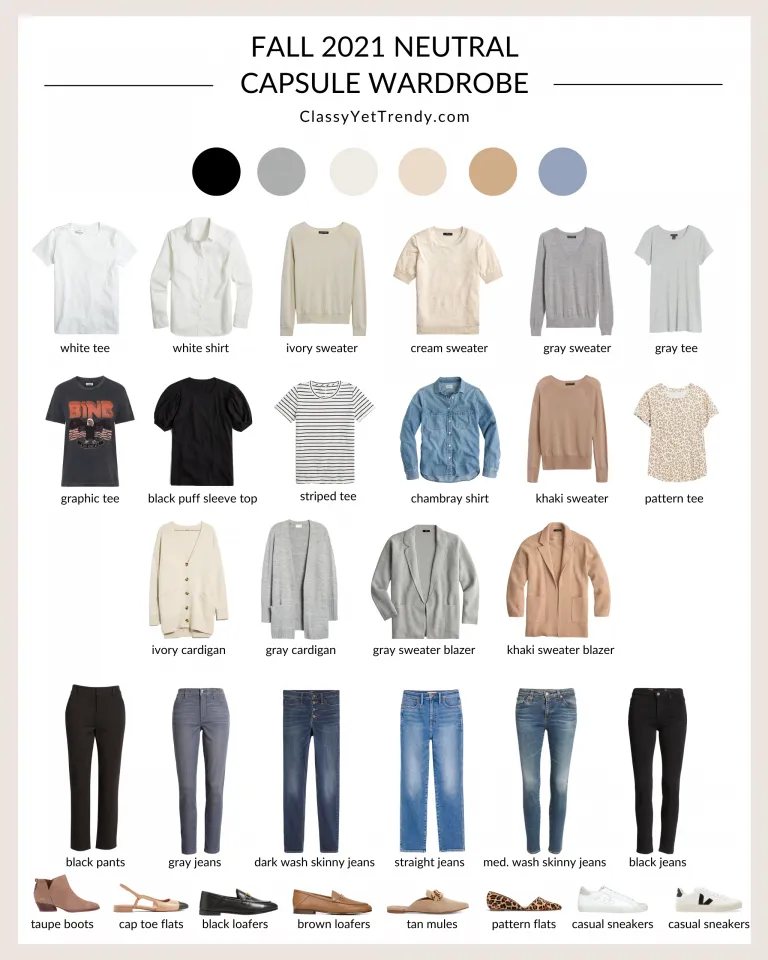
Photo: organized capsule wardrobe neutral anchor pieces and bold statement clothing flat lay, via classyyettrendy.com
Let's be honest about something: most of us shop for the exciting stuff. The bold printed blazer. The sculptural heel. The dress that stops a room. These are the purchases that feel good in the moment, the ones we Instagram and obsess over and justify with some version of "but I'll wear it all the time."
And then we don't. Or we do, but only when we can figure out what to wear it with—which takes twenty minutes and a minor existential crisis every single time.
Here's the thing nobody tells you clearly enough: statement pieces need anchors to function. And most of us have the ratio completely backwards.
Two Different Jobs, Two Different Wardrobes
An anchor piece is exactly what it sounds like. It holds things in place. It's the well-cut dark denim jean that goes with literally everything you own. The white Oxford that works under blazers, over slip skirts, tucked into trousers. The perfectly proportioned camel coat that makes any outfit underneath it look considered. These are the pieces that do the heavy lifting without ever asking for credit.
A statement piece, by contrast, announces itself. It's the thing people notice first, comment on, remember. The cobalt blue wrap dress. The vintage-inspired cowboy boot. The sequined skirt you bought because life is short. These pieces have personality in capital letters—and that's exactly what makes them tricky to wear consistently.
Here's the key distinction: anchors serve the outfit; statement pieces serve themselves. Both are necessary. Neither works well without the other. And the balance between them—your personal ratio—should reflect how you actually live, not how you wish you lived.
Why Getting the Ratio Wrong Costs You Money
This isn't just a philosophical wardrobe question. It has real financial stakes.
When your closet skews too heavily toward statement pieces, you end up with what stylists sometimes call a "museum wardrobe"—lots of beautiful, interesting things that you rarely reach for because you can never quite figure out how to make them work. Everything needs a supporting cast, and if that supporting cast doesn't exist, the star of the show stays on the hanger.
On the flip side, a wardrobe that's all anchors and no statements is functional but flat. You can get dressed easily every day, but nothing feels exciting. You know that low-grade sense of "I have nothing to wear" even when your closet is full? That's usually an anchor-heavy wardrobe talking.
The sweet spot—the place where the seesaw actually balances—is a wardrobe where your anchors outnumber your statements, but your statements are specific enough to your personality that they feel genuinely worth building around.
How to Audit What You Actually Own
Pull everything out (yes, really) and sort it into three piles:
Anchor: Versatile, relatively neutral or classic in cut, works with at least five other things in your wardrobe without much effort.
Statement: Has a strong personality—bold color, distinctive print, unusual silhouette, or significant embellishment. Requires more thought to style.
Limbo: Pieces you love in theory but can never quite make work. (Spoiler: most limbo pieces are statements that are missing their anchors.)
Once you've sorted, count. For most people, a healthy working wardrobe looks something like a 60/30/10 split: roughly 60% anchors, 30% statements, and 10% true wildcards—the pieces that are so specific to your personality that they only work in very particular circumstances but bring you enormous joy when they do.
If your statement pile is bigger than your anchor pile, that's your shopping problem diagnosed.
Lifestyle Shapes the Ratio
Here's where the advice gets personal, because there's no universal right answer.
If you work in a creative industry, commute in a major city like New York or LA, and spend weekends at gallery openings or vintage markets, you can probably carry a higher ratio of statement pieces than most. Your life creates more occasions to wear them, and your environment rewards the visual interest.
If you work from home three days a week, do school pickup, and most of your social life happens at casual dinners or weekend trips, you need a stronger anchor foundation. Your statement pieces will still get worn—but they need to be versatile enough to transition between contexts without requiring a complete outfit rebuild.
The mistake most people make is shopping for the life they want rather than the life they have. A stunning cocktail dress is a great statement piece—unless you genuinely don't go to events that call for cocktail dresses. In that case, it's not a statement piece; it's a very expensive storage item.
Smarter Shopping Starts with Asking One Question
Before any purchase, ask yourself: Is this an anchor or a statement, and do I have enough of the other one to support it?
If you're about to buy a statement piece, name three specific anchors in your current wardrobe that it works with. If you can't name them quickly, either the piece isn't right for your wardrobe—or you need to go buy those anchors first.
If you're about to buy an anchor, ask whether it genuinely fills a gap or whether you're just adding another version of something you already have plenty of. Sometimes the smarter move is one strong statement piece over three more quiet basics.
The Pieces That Live in Both Worlds
Some pieces are anchors for one person and statements for another, and that's worth recognizing. A camel blazer might be a quiet, reliable anchor in a wardrobe built around neutrals—but in a closet full of dark, muted tones, that same blazer is the boldest thing in the room.
Context is everything. The question isn't just what a piece is, it's what role it plays for you, in your specific wardrobe, in your specific life.
That's the real work of building a wardrobe that functions: not following someone else's formula, but understanding the logic well enough to write your own.
The Takeaway
The most effortless dressers aren't the ones with the most interesting closets—they're the ones who understand the relationship between their pieces and have built a foundation that makes getting dressed feel intuitive rather than exhausting.
Give your statement pieces the anchors they deserve. Let the quiet pieces do their job without guilt. And the next time you're tempted by something bold and beautiful, ask yourself what it needs to shine—and whether you've already got it waiting at home.