Dressed to Feel: How Tiny Fashion Choices Trigger Surprisingly Big Mood Shifts
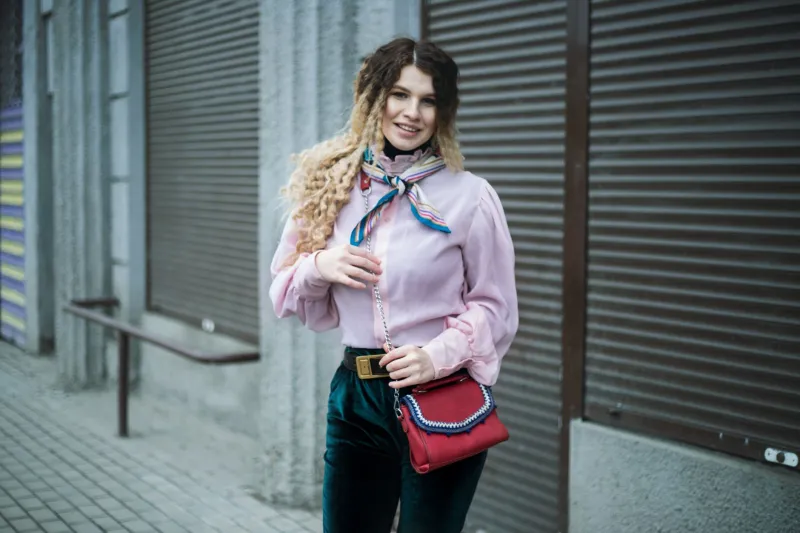
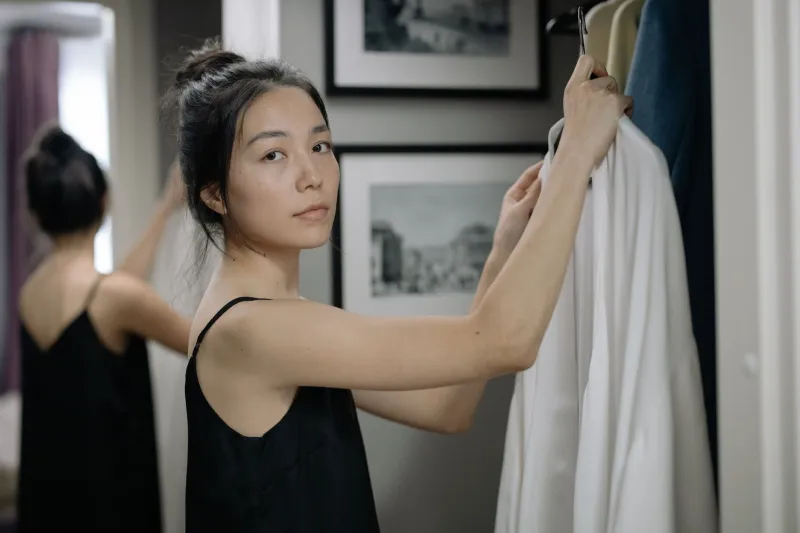
You've had that morning. The one where nothing feels right, the coffee is lukewarm, and the day looks about as promising as a gray Tuesday in February. Then you pull on that one dress — the emerald green wrap, the perfectly worn-in leather jacket, the cashmere sweater that feels like a hug — and something shifts. Your shoulders drop from your ears. You catch yourself in the bathroom mirror and think, okay, I've got this.
That's not a coincidence. And it's definitely not magic. It's your brain doing what it does best: responding to signals, making meaning, and flooding your system with chemistry that changes how you move through the world.
At Seesaw Designs, we've always believed that style is less about looking a certain way and more about tipping the scales in your favor — and it turns out there's a whole lot of neuroscience backing that up.
Your Brain on a Good Outfit
Dopamine is the neurotransmitter most people associate with pleasure and reward — it's what fires when you bite into a great slice of pizza, finish a workout, or nail a work presentation. But researchers in the field of fashion psychology have found that dopamine also responds to aesthetic choices, including the clothes you put on your body.
Dr. Dawnn Karen, a fashion psychologist and author of Dress Your Best Life, coined the term "dopamine dressing" to describe the practice of wearing clothes specifically to boost your mood. The idea isn't that you need to dress up in sequins every Monday morning. It's that intentional choices — even small ones — send signals to your brain that you're worth the effort. And your brain, bless it, believes you.
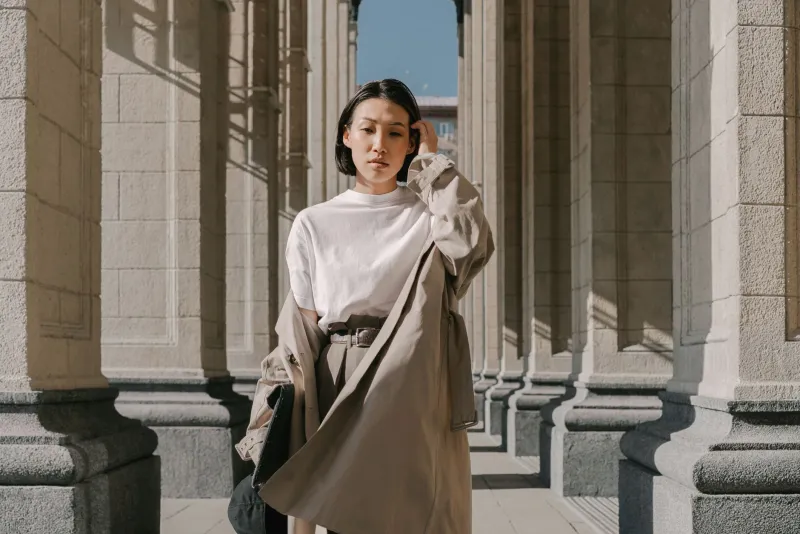
When you wear something that aligns with how you want to feel (powerful, creative, relaxed, playful), you're essentially giving your nervous system a cue. You're setting the stage before the performance begins.
The Enclothed Cognition Effect
In 2012, researchers Hajo Adam and Adam D. Galinsky published a study that introduced the concept of "enclothed cognition" — the idea that what we wear influences not just how others perceive us, but how we actually think and behave. In their experiments, participants who wore a lab coat described as a doctor's coat performed significantly better on attention tasks than those who wore the same coat described as a painter's smock. Same coat. Different story. Wildly different results.
The takeaway? The symbolic meaning we attach to clothing matters enormously. When you wear your "I mean business" blazer, you don't just look more capable — you actually become more focused and confident. The outfit isn't dressing the version of you that already exists. It's helping call forward the version of you that you're reaching for.
This is the seesaw in action: a small input on one end creates a much bigger lift on the other.
It's the Details That Do the Work
Here's where it gets interesting for everyday dressing. The mood-shifting power of fashion doesn't require a head-to-toe transformation. In fact, some of the most potent style moves are the smallest ones.
A bold lip color. Studies have shown that wearing red lipstick increases feelings of confidence and attractiveness — not because red is inherently magical, but because the act of choosing something deliberate and expressive signals to your brain that today matters. You showed up for yourself.
A well-fitted jacket. Fit is arguably the most underrated element of getting dressed. When something fits the way it's supposed to — hitting your shoulders correctly, nipping at the waist, moving with you instead of against you — your posture changes. And posture, as Amy Cuddy's research on body language famously suggests, feeds directly back into your emotional state.
A favorite fabric. Tactile experience is deeply connected to mood regulation. The softness of a linen shirt against your skin, the weight of a structured denim jacket, the slight stretch of a perfectly fitted ponte pant — these textures send sensory information to your brain continuously throughout the day. Wearing something that feels good to touch is a form of ongoing self-soothing that most of us don't even consciously register.
Real Moments, Real Shifts
We asked our community to share the small style choices that unexpectedly changed their day, and the responses were genuinely moving.
Jamila from Atlanta told us she started wearing earrings during remote work calls — not for anyone else, but because it helped her feel "present" rather than just functional. "I noticed I was more engaged in meetings, more willing to turn my camera on. It sounds silly, but the earrings were like a signal to myself that this counts."
Marcus from Portland described buying a single pair of well-made trousers after years of wearing whatever was comfortable. "The first time I wore them to a client meeting, I wasn't just hoping things would go well. I felt like they would. That's new for me."
And then there's Renee from Chicago, who started keeping a bright yellow cardigan at her desk for hard days. "It's not my normal vibe at all. But something about putting it on when I'm struggling just kind of... resets me. Like I tricked my brain into thinking it's a good day."
Renee didn't trick her brain, actually. She trained it. That's the thing about intentional dressing — the more consistently you use it as a tool, the more reliably it works.
Building Your Own Dopamine Wardrobe
You don't need to overhaul everything. You need to get curious about what already works for you and why.
Start by noticing. Pay attention to the mornings when you feel good after getting dressed versus the ones when you feel flat. What's different? Is it color? Fit? Texture? The occasion you dressed for versus the one you're actually facing?
Then, start making deliberate choices. Keep the pieces that reliably lift you — even if they don't "go" with everything or follow any particular trend — and let go of the ones that drain you before you've even left the house.
Think of your wardrobe as a toolkit rather than a collection. Some pieces are your confidence boosters. Some are your comfort anchors. Some are your creative outlets. You need all of them, and you need to know which is which.
The Tip You Didn't Know You Needed
Style, at its best, isn't performance. It's communication — with the world, sure, but more importantly with yourself. Every choice you make in the morning is a small vote for how you want to feel, how you want to show up, and what you believe you deserve that day.
The seesaw tips on the smallest things. A color. A fabric. A fit. A decision to wear the earrings even though no one will see them.
Your brain is paying attention. Might as well give it something good to work with.