Shift the Room Without Wrecking It: Small Décor Moves That Change Everything
Somewhere between this room feels stale and I need to gut the whole thing and start over is a smarter, calmer option that most people skip right past. Call it the middle path. The seesaw position. The place where a few thoughtful changes do the work of a full overhaul without the price tag, the dust, or the three-month spiral of decision fatigue.
Your home, like your wardrobe, has a balance to it. Some elements carry the weight of the whole design — they anchor the room, set the tone, and quietly hold everything else in place. Others are more flexible, more seasonal, more swappable. Knowing the difference is the skill that separates people who always seem to have a beautifully fresh home from people who feel perpetually stuck with what they've got.
The Anchor vs. the Accent
Every room has a hierarchy, even if you've never thought about it in those terms. At the top are your anchors: the sofa, the rug, the dominant wall color, the large furniture pieces that define the room's bones. These are the things that set the seesaw's center point. They're expensive to change, visually dominant, and emotionally heavy. They should be chosen carefully and changed rarely.
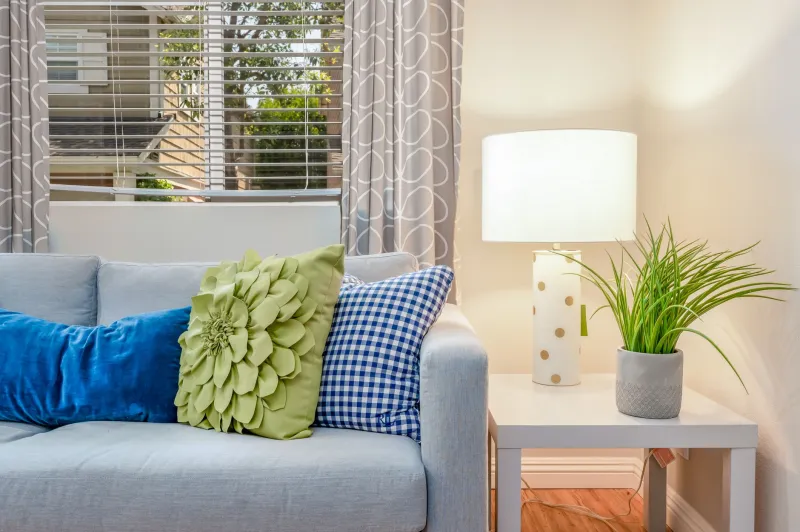
Then there are the accents: throw pillows, blankets, curtain panels, small decorative objects, table lamps, plants, artwork. These are the lighter side of the seesaw — movable, affordable, and surprisingly powerful. They can shift the entire mood of a room without asking you to move a single anchor piece.
Most people who feel stuck in their home décor are actually stuck in their anchors when what they really need is to play with their accents. The sofa isn't the problem. The four identically sized, identically colored pillows on top of it might be.
Textiles: The Fastest Way to Change a Room's Temperature
If you want to refresh a space without spending much, start with fabric. Textiles are the most emotionally responsive element in any room — they signal warmth or coolness, softness or edge, casual ease or pulled-together intention.
Swapping a chunky knit throw for a lightweight linen one doesn't just signal a new season; it physically changes how the room feels to be in. Trading out heavy velvet curtains for sheer cotton panels doesn't just let in more light — it changes the entire visual weight of the space.
A few specific textile swaps worth trying:
Change your throw pillow covers, not the inserts. Pillow covers sold separately are one of the best-kept secrets in home décor. You keep the volume, you swap the surface. A set of four new covers can transform a sofa for under $60.
Introduce texture contrast. If everything soft in your room is the same material — all cotton, all smooth — add one piece with a different hand feel. A jute basket, a boucle accent pillow, a waffle-knit blanket. Texture contrast creates visual interest without requiring any color change at all.
Layer rugs with intention. A smaller patterned rug layered over a larger neutral one is a classic designer trick that costs far less than replacing the base rug. It adds dimension, breaks up the floor plane, and can be swapped seasonally.
Wall Color Without the Commitment
Full repaints are expensive, disruptive, and permanent — at least until you want to do it all over again. But the desire to change a wall color usually isn't about the color itself; it's about wanting the room to feel different. There are ways to get that shift without cracking open a gallon of paint.
Lean into large-format art. A single piece of art in a bold color or strong graphic can visually redefine a wall without touching the paint. In living rooms especially, the artwork you choose does a lot of the same work as the wall color behind it.
Try removable wallpaper or wall panels. The quality of peel-and-stick wallpaper has improved dramatically over the last few years. An accent wall in a bedroom or a small hallway can be transformed in an afternoon and reversed just as easily.
Rearrange what's already there. Before you buy anything new, try moving the artwork you own to different rooms or different walls. A piece that's been invisible in one context can become a focal point in another. It costs nothing and the effect is often startling.
The Functional Pieces That Pull Double Duty
Some of the most impactful décor swaps are in items that also have to work for a living. Lighting, storage, and surface pieces can all be refreshed in ways that change both the function and the feeling of a room.
Swap one light source. Overhead lighting is almost always the least flattering option in a room, but it's also the hardest to change. What you can change more easily is a table lamp or floor lamp. A new lamp in a different height, material, or shade color shifts the quality of light in a room more than most people expect. Warm-toned bulbs alone — swapped into existing fixtures — can make a room feel 20 degrees cozier.
Edit your surfaces. The objects living on your coffee table, bookshelves, and countertops have more visual impact than they seem. A quick edit — removing two-thirds of what's there and rearranging the rest — often makes a room feel both cleaner and more intentional. Less is frequently more here, especially when what remains is given room to breathe.
Add one organic element. A live plant, a branch in a vase, a bowl of seasonal fruit. Natural elements have a grounding effect on a room that's hard to replicate with anything manufactured. They also change with the seasons naturally, which means they're doing the work of keeping a space feeling current without any effort on your part.
The Seasonal Rotation Mindset
The most effective approach to home décor refresh isn't a single dramatic overhaul — it's a gentle, ongoing rotation. Think of it the way a good wardrobe works: the bones stay consistent, but the details shift with the season, your mood, and what's happening in your life.
Boxing up your heavy winter textiles in spring and replacing them with lighter, breezier versions isn't just practical — it's a reset that makes your home feel intentionally tended. Doing the same in reverse when the air turns crisp in the fall makes the transition feel like a welcome change rather than just a drop in temperature.
Your home doesn't need to be perfect. It needs to feel like it's in conversation with you — responsive, alive, and never quite finished. That's the seesaw in balance: always in gentle motion, always finding its way back to center.