The Thrift Store Is a Mirror: What Secondhand Shopping Reveals About Your Real Style

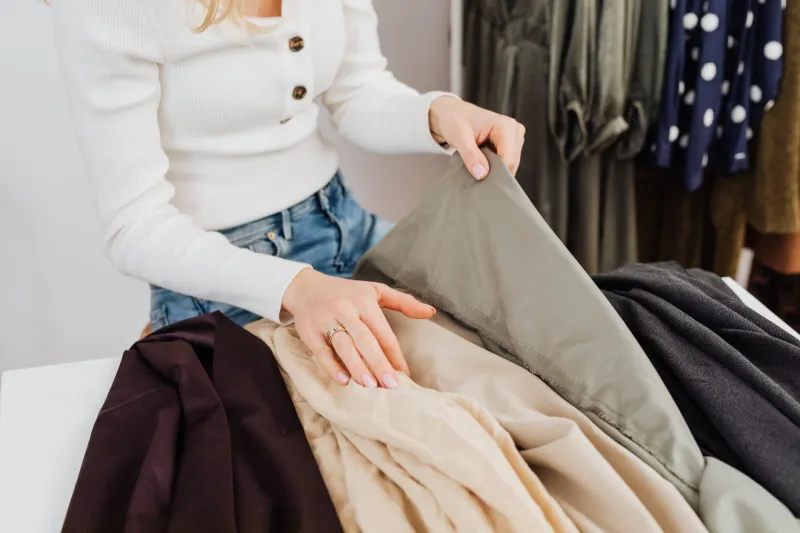
Photo: PattayaPatrol, CC BY-SA 4.0, via Wikimedia Commons
Walk into a Goodwill, a Depop rabbit hole, or a packed vintage shop on a Saturday afternoon, and something interesting happens. Without the curated displays, the mood lighting, or the carefully constructed brand story, you're left with just... stuff. Thousands of pieces with no particular agenda. And the only guide you have is yourself.
That's exactly what makes thrifting one of the best style research tools available—and most people don't even think of it that way.
Why Low Stakes Change Everything
There's a particular kind of pressure that comes with traditional retail shopping. The price tags, the salespeople, the implied narrative of who you'll become if you buy this jacket—it all adds up to a shopping experience that's more about aspiration than honesty.
When something costs $185, you don't just evaluate whether you like it. You evaluate whether you should like it. Whether it fits the version of yourself you're trying to build. Whether it justifies the spend. That's a lot of psychological weight for a piece of clothing to carry.
At a thrift store, a blazer costs $8. Maybe $12 if it's a good one. At that price point, the stakes collapse. You're not making a character statement. You're just trying something on. And that shift—from aspiration to instinct—is where the real information lives.
The Speed of the Decision Tells You Something
One of the most useful things to pay attention to while thrifting is how quickly you make your choices. Not the final decision to buy or pass, but the initial grab. What makes you pull something off the rack before you've even processed why?
That instinct is data. It's your eye moving faster than your second-guessing brain, reaching for something because something in it resonates. The silhouette, the color, the texture—something is speaking to a preference you might not have consciously articulated yet.
Pay attention to the patterns. If you keep pulling structured jackets even though you tell yourself you're a casual dresser, that's worth noting. If you're consistently drawn to earthy tones but your current closet is full of black, that's a gap between your stated preferences and your actual ones.
Thrifting, done with a little awareness, is basically a Rorschach test for your personal style.
What You Put Back Is Just as Revealing
Here's the flip side: the things you pick up and then return to the rack are equally interesting.
Maybe you're consistently drawn to bold printed dresses but always talk yourself out of them. Maybe you grab vintage band tees and then second-guess whether they fit your life. These hesitations aren't random—they're the places where your real taste bumps up against something: a perceived practicality barrier, a social anxiety, a story you've been telling yourself about who you are versus who you're allowed to dress like.
A good thrift session, when you're paying attention, will surface these patterns pretty quickly. And once you see them, you can start asking whether the hesitation is actually valid or just habitual.
The Volume Problem (and Why It Works in Your Favor)
A traditional boutique or department store has already done a lot of editing for you. Someone made decisions about what goes together, what's on trend, what fits a particular customer profile. That editing is convenient, but it's also limiting. You're shopping within someone else's vision.
A thrift store has no such curation. You're wading through decades of fashion, multiple aesthetics, every price point and quality level imaginable. It's overwhelming—and that's kind of the point. When you have to sort through genuine chaos to find what resonates, you build a sharper sense of your own filter.
You stop asking "is this on trend?" because the concept of "trend" becomes meaningless when you're looking at a rack that spans 1987 to last season. Instead you ask: does this work for me? That's a much more useful question.
Thrifting as a Style Vocabulary Builder
One of the quieter benefits of regular secondhand shopping is that it expands your exposure to pieces you'd never encounter in a conventional retail environment. A perfectly cut pair of wide-leg trousers from the '90s. A silk blouse with an unusual collar. A coat with proportions you've never seen in a modern store.
These pieces teach you things about what works on your body and in your wardrobe that you can't learn from a carefully merchandised retail floor. You start to understand why a certain sleeve length flatters you. Why a particular weight of fabric moves the way you like. Why you keep coming back to a certain era of dressing even when you can't explain it.
That's style vocabulary. And you can't build it without experimenting—which is a lot easier to do when the experiments cost six dollars.
The Practical Side: Getting More Out of a Thrift Session
If you want to use thrifting as genuine style research and not just a treasure hunt, a few small shifts make a big difference.
Go without an agenda. Don't walk in looking for a specific item. The research happens when you're browsing without a target, because that's when your instincts take over.
Try things on that you wouldn't normally consider. The whole point is to surprise yourself. A silhouette that looks wrong on the hanger sometimes looks completely right on your body.
Take a photo before you put it back. Even the things you don't buy can be useful. A photo archive of what caught your eye—even the things that didn't quite work—starts to show you patterns over time.
Notice the emotional response, not just the visual one. Does putting on a particular piece make you feel more like yourself? More energized? More confident? That response is worth paying attention to, even if the piece isn't perfect.
Your Real Taste Is Already There
The most valuable thing thrifting does is strip away the noise between you and your actual preferences. No algorithm curating your feed. No brand story nudging you toward an identity. No price tag inflating the perceived value of something that might not actually be right for you.
Just you, a rack of stuff, and your honest instincts.
That's where real style confidence comes from—not from buying more or buying better, but from learning to trust what you genuinely reach for. The thrift store, for all its chaos and smell of old fabric softener, is one of the best places to figure that out.