Wear the Color That Scares You: The Unexpected Confidence Hiding in Your Closet
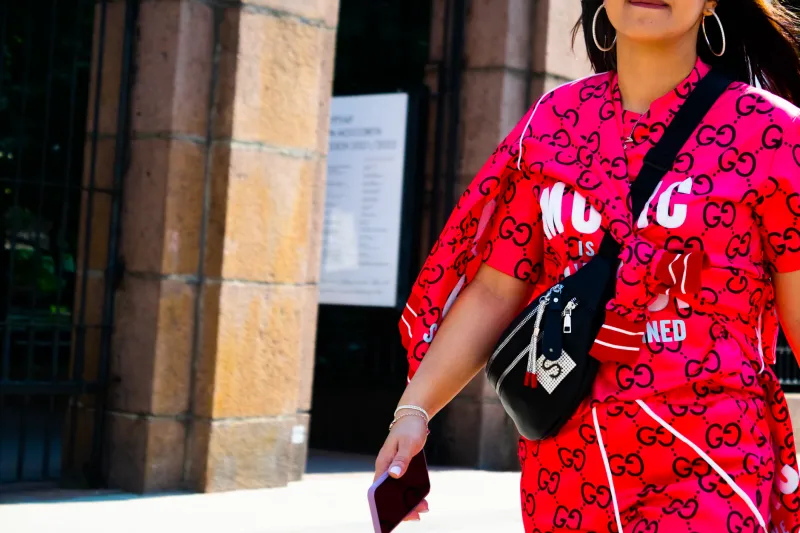
You know the feeling. You're scrolling through an online shop or flipping through a rack at your favorite boutique, and something stops you cold. It's a color — maybe a saturated tangerine, a jarring cobalt, a green so loud it practically has its own zip code. Your first reaction is something between delight and mild panic. You love it. You would never wear it. You keep scrolling.
But what if that instinct to keep moving is exactly the thing worth questioning?
The Pull Toward the Uncomfortable
Psychologists have a term for the rush that comes from wearing something that makes you feel genuinely alive: enclothed cognition. It's the idea that what we wear doesn't just reflect our internal state — it actually shapes it. Studies have shown that people perform differently, think differently, and carry themselves differently depending on what they've put on their bodies that morning.
Bold color takes this concept and cranks it up. When you wear a color that registers as a lot — for you, specifically — your brain notices. It has to reconcile the discomfort of standing out with the undeniable fact that you chose this. Deliberately. On purpose. That tiny internal negotiation? It's a rep. And like any rep, it builds something over time.
The dopamine connection here is real. Color genuinely triggers neurological responses. Warm hues like red, orange, and saturated yellow activate arousal pathways. Cool brights like electric blue or vivid violet can signal authority and calm simultaneously. Wearing these shades doesn't just change how others see you — it changes the chemical conversation happening inside your own head.
Why "Love It But Would Never Wear It" Is the Most Interesting Category
Most of us have an internal style editor running 24/7. It's the voice that says that's not really you or you can't pull that off before you've even tried anything on. This editor is useful sometimes — it keeps us from impulse-buying things we'll never touch — but it's also deeply conservative by nature. It defaults to what's worked before, what's gotten compliments, what's safe.
The colors you love from a distance but keep at arm's length live in a fascinating gray zone. They're not colors you hate. You're actually drawn to them. The hesitation isn't about aesthetics — it's about visibility. About the way wearing something bold essentially announces I'm here, look at me to every room you walk into.
And that announcement, for a lot of people, feels genuinely risky.
Here's the seesaw moment: the weight on one side is comfort and invisibility. The weight on the other is aliveness and presence. Neither side is wrong. But if you've been sitting heavy on the comfort side for a while, the scale might be worth tipping.
Starting Small (But Not Too Small)
You don't have to walk into your Monday morning meeting in a full head-to-toe fire engine red situation. That's a lot — even for the boldest among us. But there's a difference between easing in and chickening out, and it's worth knowing which one you're doing.
A truly scary color worn only as a sock, hidden inside a shoe, is technically a start. But it's not going to move the needle much. The goal is to wear the color somewhere you can actually see it. Somewhere other people can see it. A bag, a scarf you actually let show, a blouse under a blazer with the blazer left at home today.
The exposure is the point. Wearing something that makes you feel slightly exposed — and then surviving the day just fine — is one of the most quietly effective confidence exercises there is. You do it once, nothing catastrophic happens, and your brain files that data away. We tried the scary color. We're okay. Noted.
The Paradox of Looking Wrong and Right at the Same Time
Here's something the most interesting dressers understand intuitively: the best outfit choices often feel slightly off before they feel exactly right. There's a period of adjustment, both internal and external, that happens when you start wearing colors or combinations that break your own rules.
At first, you might catch yourself in a mirror and think this is a lot. You might get a double-take from a coworker that you can't fully decode. You might fidget with the sleeve or second-guess yourself in the elevator.
And then — usually somewhere around 11am — something shifts. You stop thinking about it. You just exist in the color. And by the end of the day, it's just an outfit you wore, except you feel oddly more like yourself than you did that morning.
That's the paradox. The thing that initially felt foreign becomes a vehicle for something genuine. The risk becomes the reward.
Color Bravery Is a Transferable Skill
This is the part that sounds a little woo but is actually pretty grounded: doing small brave things regularly makes doing bigger brave things easier. It's not magic. It's just practice.
When you wear the tangerine blazer to the farmers market and someone compliments it and you don't immediately say oh, it's not really my usual thing — when you just say thank you and mean it — you've practiced receiving attention without deflecting it. That's a skill. It shows up in job interviews. In first dates. In meetings where you actually have something worth saying.
Style, at its best, isn't about looking impressive to other people. It's about practicing being seen on your own terms, in low-stakes situations, until being seen starts to feel less like a threat and more like just... a thing you do.
A Few Colors Worth the Leap
If you're not sure where to start, here are a few shades that tend to live in that love-it-but-won't-wear-it zone for a lot of people — and why they're worth the experiment:
- Chartreuse — It reads as chaotic on a hanger and weirdly sophisticated on a person. Especially powerful as a top.
- Burnt orange — Warmer than you think, and somehow flattering across a wider range of skin tones than its reputation suggests.
- Cobalt blue — Feels loud, wears clean. Pairs with almost everything, even though it looks like it shouldn't.
- Magenta — The color people say isn't for them until they try it and realize it's been for them all along.
- Deep forest green — Not as safe as olive, not as aggressive as emerald. Lives in an interesting middle space.
None of these are objectively correct. The point is to find your version of the scary color — the one that makes your pulse tick up slightly when you imagine actually wearing it out in public.
The Seesaw in Action
At Seesaw Designs, we're pretty committed to the idea that style is a living, shifting thing — not a fixed identity you have to protect. The best wardrobes tip and balance, lean into discomfort and then right themselves. They're not static.
Wearing the color that scares you a little is one of the most direct ways to participate in that movement. It's not about being fearless. It's about being afraid of the cobalt blouse and wearing it anyway, and then going about your Tuesday like a person who does that kind of thing.
Because eventually, you will be.